Showcasing my final design, I’ll be explaining how I involved Edward Tufte’s five theories in my animation.
For my Planets, I have incorporated the colours purple, orange blue and pink which is a nice mixture to make the main subject matter pop on screen. Not all these colours are natural like purple and pink but are believed to be still necessary as the disco scene will involve these colours so will transition nicely. I’ve even added a glass effect to add to that sci-fi feel whilst also connecting back to the disco theme.
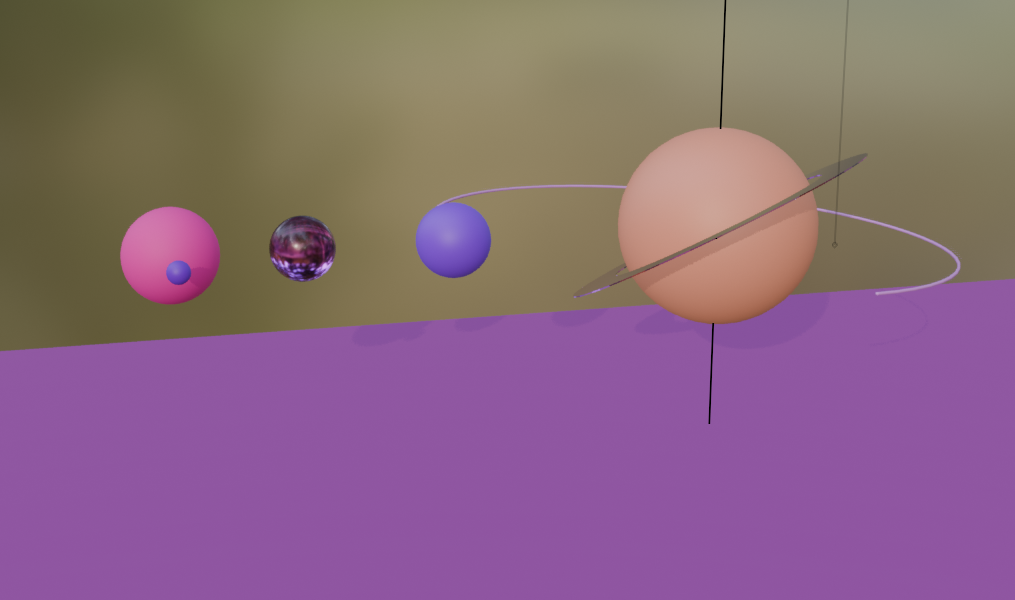
I’ve added a small detail to the main planet to make it obvious that’s the focus of this animation and what will ultimately change. This links into the micro/macro theory of Tufte as the small detail of the chosen colours and shapes has a purpose and deeper meaning than just looking nice. The shapes I mainly use are spheres, showcasing the similarity and competitiveness of Edward Tufte’s small multiples. Making it easier for the viewer to comprehend and connect.
The background isn’t on show in this image but it will be a black background with white dots to visualise a starry night and a nightclub environment, again showcasing the use of Tuftes micro/macro theory but also contrast to make the main subjects pop.
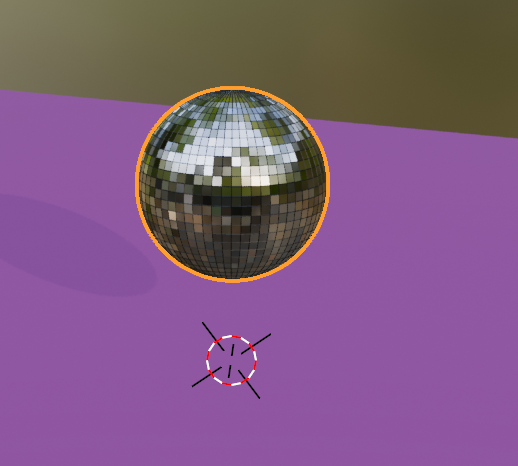
Above is the unrendered design of my 3D disco ball that will be in the final scene of the animation. I’ve made the ball reflective so I will be adding a stock image of a purple-themed nightclub as the background, the ball can reflect off. This is to make it obvious that the atmosphere is in a club with the music the animation will be playing and added visuals.
In reflection on my final design, I realised the style should be more simple than what I originally wanted so the focus is more on the transition and overall animation. It also made rendering the animation much faster. There were some animations I could not execute, for example, adding lights to the disco ball as it wouldn’t work with the background I created, however in the end it made it less complex and straight to the point like in Edward Tufte’s theories.