The ethical subject I have chosen for the animation is social media addiction and how it affects teens and young people’s mental health and overall lives.
When designers and developers curate social media platforms like Facebook, Instagram, YouTube, and more, they design the interfaces to be addictive and maximise user engagement. These creators know the weakness of the human brain and how to produce dopamine to keep users addicted, just like the dopamine a person would receive playing slots. These platforms’ compulsive aspects include infinite scrolling, notifications, tagging in photos, and more.
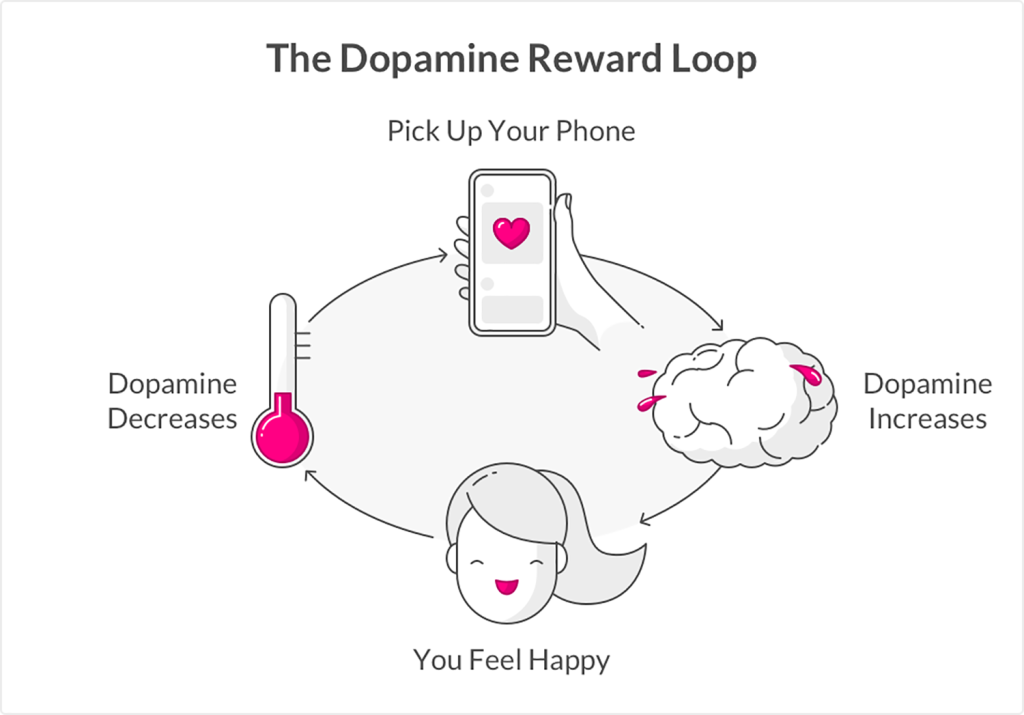
To obtain a greater understanding of the addictive elements of social media, The Social Dilemma documentary, made in 2020, was studied. In this film, they interview different social media curators, expressing their views of the platforms and their effects. One interesting aspect of social media is how much information they gather about every individual who uses it, “They have more information about us than has ever been imagined in human history” (Shoshana Zuboff, 2020). This data predicts a person’s actions and creates a personalised algorithm, making their product more addictive than anything else.
Social media focuses on the user, where they can talk about themselves and say things anonymously without limit. People talk about themselves 30-40% of the time. On social media, it increases to 80% of the time (Hiliard, 2025, Addiction Centre). As social beings who love talking about ourselves, this feeds into our addiction to the platforms.
There has been a mental health concern in teens and young people since the release of smartphones, with adolescents reporting major depression in a given year increased by 52% from 2005 to 2017. From 2009 to 2017, it grew by 63% in adults aged 18 to 25 (Science Daily, 2019). Showing a link to depression rising due to the implementation of social media into our everyday lives. Anxiety cases have also increased. Destroying the confidence of their users. These services can also distract young people from schoolwork, family activities, and sleep and delay their learning of real-life interactions as they become addicted. Social media is not all negative for young people; it helps them connect to new friends, find new hobbies and express themselves.
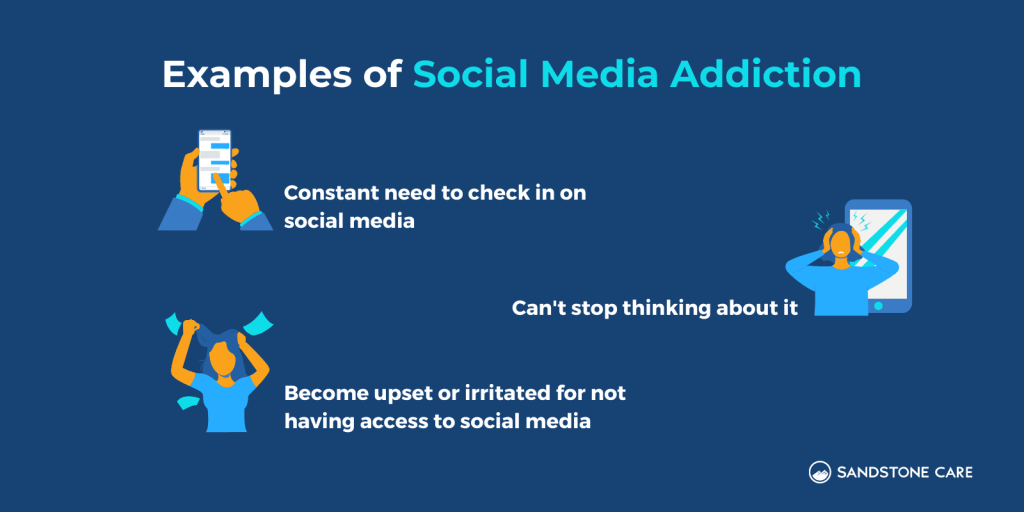
There are many aspects to blame when it comes to social media addiction in young people and teens. Is it the fault of parents giving teens phones at such a young age? The UK Safer Internet Centre says children aged 9 and 11 receive phones (UK SIC, 2023). Is it the fault of the makers of these social media platforms for making them so addictive? Or is this just the way of life now?
Young people and teens are a very impressionable group. These addictions they develop during adolescence will carry on into their adulthood, negatively affecting their lives. Educating them better on social media addiction and offering help is essential; of course, making the apps less addictive would aid immensely, but as a multi-million-dollar corporation, it will be difficult to change them. The primary purpose of this animation is to show the effects of social media on young people and how they can help to avoid or get out of it. The focus should be on the teenage group and their parents, so they know what can happen and how they can help.
References
Deborah Quinn (2023). Social Media Addiction: 4+ Signs You’re Addicted to Social Media [Blog post]. Sandstone Care. 17 May. https://www.sandstonecare.com/blog/social-media-addiction/ [25/03/25].
Maria Clark (2020) 40+ Frightening Social Media and Mental Health Statistics [Blog post]. Etactics. 12 November. https://etactics.com/blog/social-media-and-mental-health-statistics#:~:text=Eight%2Dgraders%20who%20spend%20over,that%20it’s%20a%20major%20problem.[25/03/25].