Overview
For my project, I will create a 3D art gallery walkthrough using VR of a specific artist. Deciding which artists to recreate in a VR space was challenging, but instead of choosing classic painters like Van Gogh, I opted for a modern artist, Kaws. Kaws has an art style that blends pop art and street art. Designing it in a VR space would create a new way of experiencing art and design, and it would be challenging to explore and recreate their work in a 3D world. I chose this project to present the history and story of this artist’s work in an engaging manner. Immersive learning enables users to experience the art firsthand, rather than just observing it. Walking through the art pieces will evoke an emotional response, making it much more memorable and engaging. My goal is to educate users about the artist, including their early work, the development of their style, and their techniques.
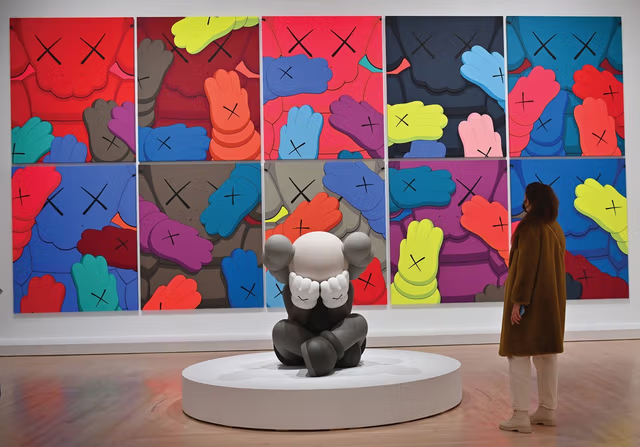
What technology do I plan on using? I initially considered using OpenBrush on VR, as that was what inspired me to create an immersive art gallery; however, I realised there are some limitations to creating an educational gallery, such as adding text. There are ways to get around this, such as importing text from other media; however, this would make the design of this 3D world much more tedious. After researching, I learned that Gravity Sketch does include text, so I plan to use that instead. I may explore other VR art spaces for this project; however, I need to practice with each one to determine which one best aligns with the project idea. Other external technologies I’ll use for this art gallery include Blender to design 3D models for import into the VR world. I can then design them within OpenBrush or Gravity Sketch. I chose to produce this idea in VR art because users can experience an immersive environment that encapsulates the Kaws art pieces. Users can turn their heads 360 degrees, allowing them complete freedom to explore the space as they please. They’ll be able to move as well from place to place, getting a look at each art piece from every angle. I also chose this technology because I haven’t used anything like it before, and it’ll be challenging to implement Graphic design and UX principles within this medium.
The target audience for this project can vary, as it is an educational experience of an Artist. However, considering that the environment and paintings will be vibrant and users may experience motion sickness as they look around, the target audience will range from 13 to 60 years old. I’d be cautious with an audience that is too young, as “most VR headsets are not designed for children under the age of 13” (Scott Steinberg, Parents’ Guide to VR headsets and VR games for kids, 2025); they can develop eyesight problems as their eyes are still developing. Older users can use VR; however, they should be aware of potential health risks, such as epilepsy, associated with its use. The artist Kaws is a modern artist, and his work is enjoyed by a diverse range of individuals, from high-end art collectors to young people, as he has collaborated with notable brands such as Dior and more child-like brands like Peanuts.
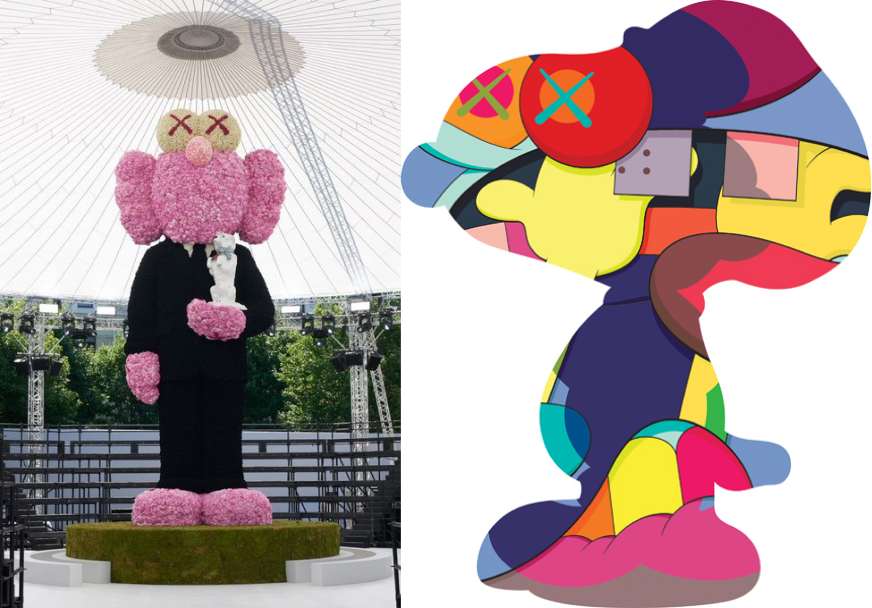
I aim to create an immersive and exploratory experience of Kaws’ art pieces for users. An adventure that provides both educational and memorable visuals. Users will be able to move freely with a 360-degree view, allowing them to look at all the paintings. I want the environment to represent the artist’s style so they feel like they stepped inside the Kaws universe. I can achieve this by ensuring the sounds/music and textures align with the artist’s pop and street style. Art is open to interpretation; users will make their own personal connections in this VR world as they interact with each art piece. To add the educational aspect, I’ll design a context for the Kaws art, showcasing the artist’s process and history. Initially, I plan to add information panels for this feature; however, I will conduct further research on the potential addition of voiceovers. The experience will be comfortable for users, who can sit or stand as they move with a click of a button on the VR headset, allowing for free movement.
As mentioned earlier, the flexibility of my curated experience allows users to choose whether to sit or stand, ensuring that those who are unable to stand can have the same experience as everyone. Users don’t need to move around the environment if they choose not to. My project will provide an experience with limited interactions, as this is an art exhibition. Individuals with hearing and visual impairments will benefit from having text information panels, enabling them to read about the artist’s pieces. The text will be large, making it easier to read. For those with colour blindness, I can offer different colour options that they can adjust to their liking.
I will not convey Kaw’s art in a way they didn’t intend. Kaws is an American artist who incorporates a lot of American culture into their art. To do this, I will research the artist’s history and purpose. Another ethical consideration is informing users about the platform’s data usage and tracking policies, if any apply. When it comes to the Gravity Sketch, they “collect, use and share Aggregated Data such as statistical or demographic data for any purpose.” (Gravity Sketch, Privacy Policy). However, this isn’t personal data, and they don’t collect personal data. Open Brush has a policy of collecting data and uploading and downloading within the device to improve the app. “Any information provided by third-party service providers to the App is held solely on your device and is not collected.” ( Open Brush, Privacy Policy). The Visuals of my experience will be bright, yet there won’t be flashing lights and sudden movements to prevent motion sickness. Adding a warning for those who suffer from prevalent motion sickness and epilepsy is vital to consider those users.
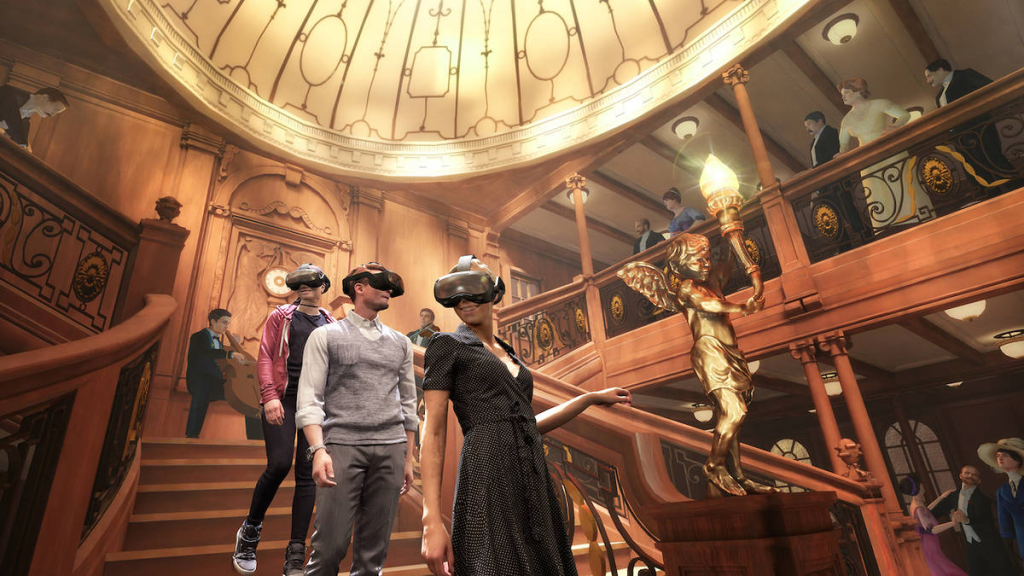
The use of VR for art and other exhibitions is becoming increasingly commonplace, and I even had the opportunity to experience one called Legend of the Titanic in London. They included two VR experiences: one for music and pairing visuals. I was seated down for this experience, only being able to move my head freely. The other showcased a walkthrough of the ship; I moved in line with other people, and staff were on hand to ensure everyone’s safety during the walkaround. The addition of both VR adventures significantly enhances the overall fun and immersion of the exhibitions. Instead of walking around and reading, you can experience the music and physically walk through the Titanic, making the overall exhibition much more memorable and different from any other. Madrid Arted Digitales (DAM) designed the VR spaces for the Titanic exhibition.
Project Plan
My Project Plan will be an 8-week plan, broken into 5 phases:
- The first will be research and references. Here, I’ll be researching the different art pieces I’ll be using for the VR experience, including the process and history of the art pieces from Kaws. This research will be used in the information panels for the art pieces. Defining how many pieces I’ll be including. I plan to showcase the progression of Kaw’s art from his early work to his current pieces, highlighting how his style has evolved and matured. I’ll also research other art galleries in VR and take inspiration. Tools include: Google, Trello, Figma. 2 Week timeframe.
- Next, I will plan out the VR space, drawing up a layout and placing each art piece using blocking within the space, so I have a better understanding of the spacing and size. Tools include: pen & paper, Gravity Sketch/Open Brush, Blender, Trello. 1-week timeframe.
- The next challenge will be designing models and content. Creating artwork in a 3D space will require some trial and error. Experimenting with colour, shape, light and text along with the information panels. Tools Include: Open Brush/Gravity Sketch, Blender, pen & paper, Trello. 2-week timeframe.
- Once each piece is fabricated and in place, I’ll add the information panels and music. It will need to be tested by multiple people, including me. It’s also essential to mix the testers with people who are unfamiliar with the project. Tools included: Trello, OpenBrush/Gravity Sketch, and audio software. 2 week timeframe.
- Using the feedback from the test, I will add the final details to polish the piece. 1 week.
User Stories
User stories help build the direction the Kaws art gallery will go. Taking into consideration the user’s journey within the VR experience.
User 1 – Art enthusiast
- Pain Point: “As an avid exhibition explorer, not all are memorable and lack emotional connection to the art presented”
- Solution: With the use of immersive VR, users build a strong personal connection to the overall environment and art pieces.
- Outcome: Users come away feeling inspired, experiencing an art gallery in a new way, making it a much more memorable experience.
User 2 – First-time VR user
- Pain Point: “Being a new user, I’m intimidated and worry I won’t get the most out of this experience”
- Solution: VR is surprisingly easy to use, especially the apps I’m using to host my art gallery (Open Brush/Gravity Sketch). During the introduction, instructions will be provided on how to move and what to expect.
- Outcome: The user will feel welcomed and fully understand the instructions, so they come away getting the most out of their experience.
User 3 – User with a mobility disability
- Paint Point: “As a wheelchair user, I hope there are no limitations to the exploration of this art gallery”
- Solution: To move in an open brush/gravity sketch, you use the controller to teleport around and don’t have to move physically. Allowing wheelchair users to get the whole experience.
- Outcome: The art gallery is accessible for individuals with mobility issues, ensuring that no one is excluded.
Taskboard
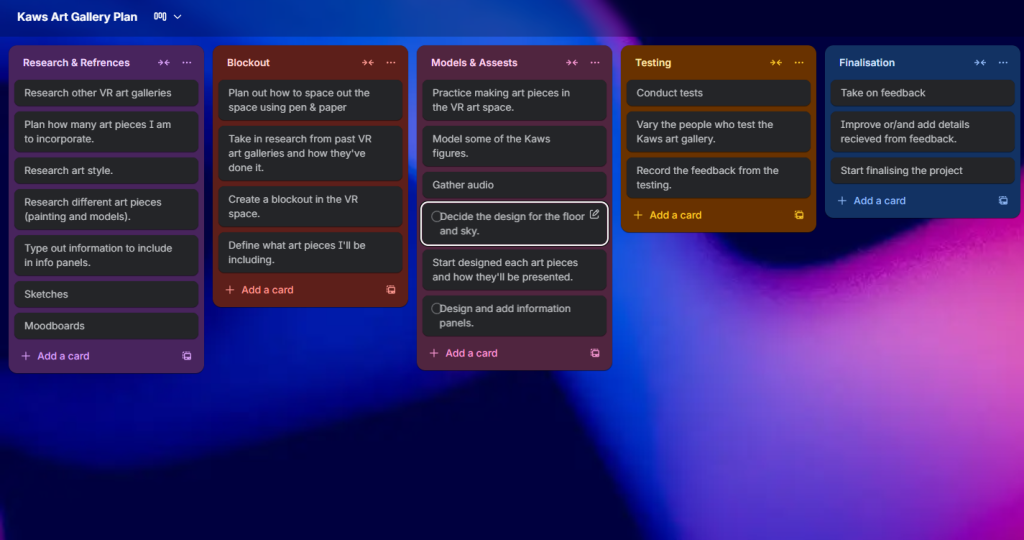
A significant aspect of this project will be based on research into the artists, VR art principles, and how others have achieved an immersive art gallery experience. Working in this medium is brand new to me and will be a challenge, so I have planned out every detail I need to achieve. Trello is beneficial for this.
Storyboard
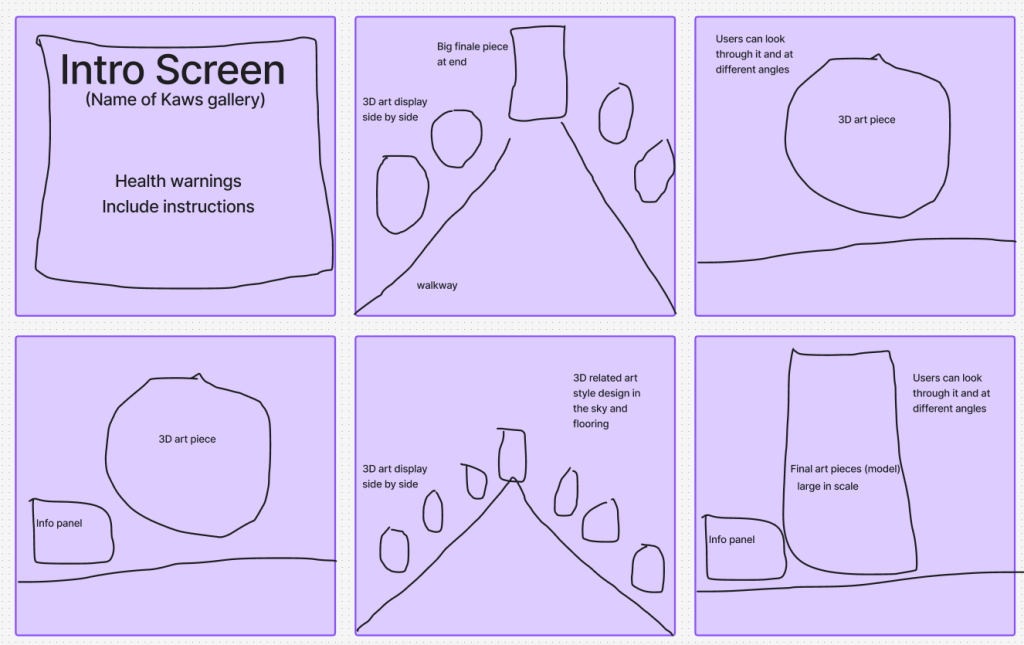
The image above is an early storyboard of the art gallery experience.
First, I plan to add an intro screen that the user will see when they first load into the VR art gallery. This can be a floating box with added text that users can look away from, or if possible, I’ll animate the box to move smoothly. The Introduction will include information about what this art gallery is about, a health warning, and basic instructions for new users.
In the second frame, users will be introduced to the gallery environment, where they can view every art piece in 3D form. I want it to be a single, long path or a more abstract one, so the sense of adventure is greater for the user. To illustrate this example more effectively, I created a long path with the art pieces showcased on either side. The scale of each art piece will vary, and users can explore in any order they please.
The third frame is a close-up of what users can expect when they view one of the artworks. Users will be able to explore every angle and aspect of the art, viewing it from new angles to immerse themselves fully.
In the fourth frame, I added the information panels that will be included with each artwork. These info panel will showcase the name of the art, date, process and potential history.
The fifth frame shows that the entire environment will be in the style of Kaws. I plan to design the flooring and sky in his style to align with the same pop and street art feel.
Finally, the last panel shows off the final art piece at the end of the art gallery and path. This piece will be the largest, and users can explore every angle of the artwork through it. I suggest including an outro screen or a destination for users to go to at the end of the gallery. However, with limited experience in the VR art world, I’m unsure how to achieve this yet. Nevertheless, it’s a potential add-on for the end of the experience.
Reflection & Emerging Tech Justification
I chose to use VR Art media for my project as I have no experience using it. I did think of creating the same experience in Blender by making a 360 video; however, I’ve used Blender a lot and want a new challenge. When using Open Brush on Meta Quest, I found the freedom of creating art in 3D to be both new and exciting. I wanted to make something meaningful while also being visually appealing in this new VR world. Being able to import 3D models into these VR art apps will enhance the environments and make them more polished. When I discovered this, I decided to try it out for my project. I have had the opportunity to experience VR in museums before, and they are highly emotionally and visually effective. I go home with great memories of it.
As mentioned earlier, VR is used for various experiences, such as the Titanic exhibit I visited. It’s becoming more common, as it offers a more emotional and immersive artistic expression. The 3D form transcends any traditional art form people have experienced in the past.
The use of VR is innovative and forward-thinking due to the vast immersion it offers, as well as the high levels of interaction and the ability to transcend any boundaries that other art forms have. It allows users to experience anything from things of the past, such as the dinosaur age, to current experiences that require travel, like world wonders. Nothing else offers these experiences. VR has no limits.
When I first heard of VR art, I didn’t think it’d have much in common with Graphic design; however, the principles are very similar. They share fundamentals about colour theory, hierarchy, composition and User experience. The purpose of both is to share information visually, communicating in the same way. Storytelling is another important aspect of both; VR does this better due to the immersion it offers. Users will be in a VR headset for my project and will be fully immersed in the experience I create, having complete freedom to explore as they please.
To make my project successful, I need to recreate the art pieces accurately in a new 3D world. This will be challenging, but I plan to practice to make it perfect. I need to ensure the environment I design is immersive but also accurately portrays the artist in their style. Making sure I’m focusing on the user journey and how they’d feel and interact with my project.
References
Scott Steinberg (2025) Parent’s guide to VR headsets and VR games for kids [Blog post]. Verizon. 18 February. https://www.verizon.com/about/parenting/parents-guide-vr-headsets-and-vr-games-kids [10/11/25].
Gravity Sketch (NA) Privacy Policy*. https://gravitysketch.com/privacy-policy/#:~:text=We%20also%20collect%2C%20use%20and,about%20criminal%20convictions%20and%20offences. [10/11/25].
Open Brush (NA) Privacy Policy*. https://openbrush.app/privacy-policy.html#:~:text=The%20App%20has%20the%20ability,the%20content%20of%20external%20services. [10/11/25].
Paddy Johnson (2021) The Big Review: Kaws at the Brooklyn Museum [Blog post]. The Art Newspaper. 9 April. https://www.theartnewspaper.com/2021/04/09/the-big-review-kaws-at-the-brooklyn-museum [10/11/25].
Outlander Magazine (2020) DIOR x KAWS SS19 – Show Settings [X]. 4 August. https://x.com/StreetFashion01/status/1290722332223340547. [10/11/25].
Kaws Too (NA) Prints*. https://kawstoo.com/limited-edition-prints/. [10/11/25].
Tamsin Salfeais (2025) This Immersive Titanic VR Experience In London Might Be The Perfect Escape For The Whole Family On A Rainy Autumn Day. [Blog post]. Secret London. 7 October. https://secretldn.com/titanic-echoes-from-past-vr-tickets/ [10/11/25].